
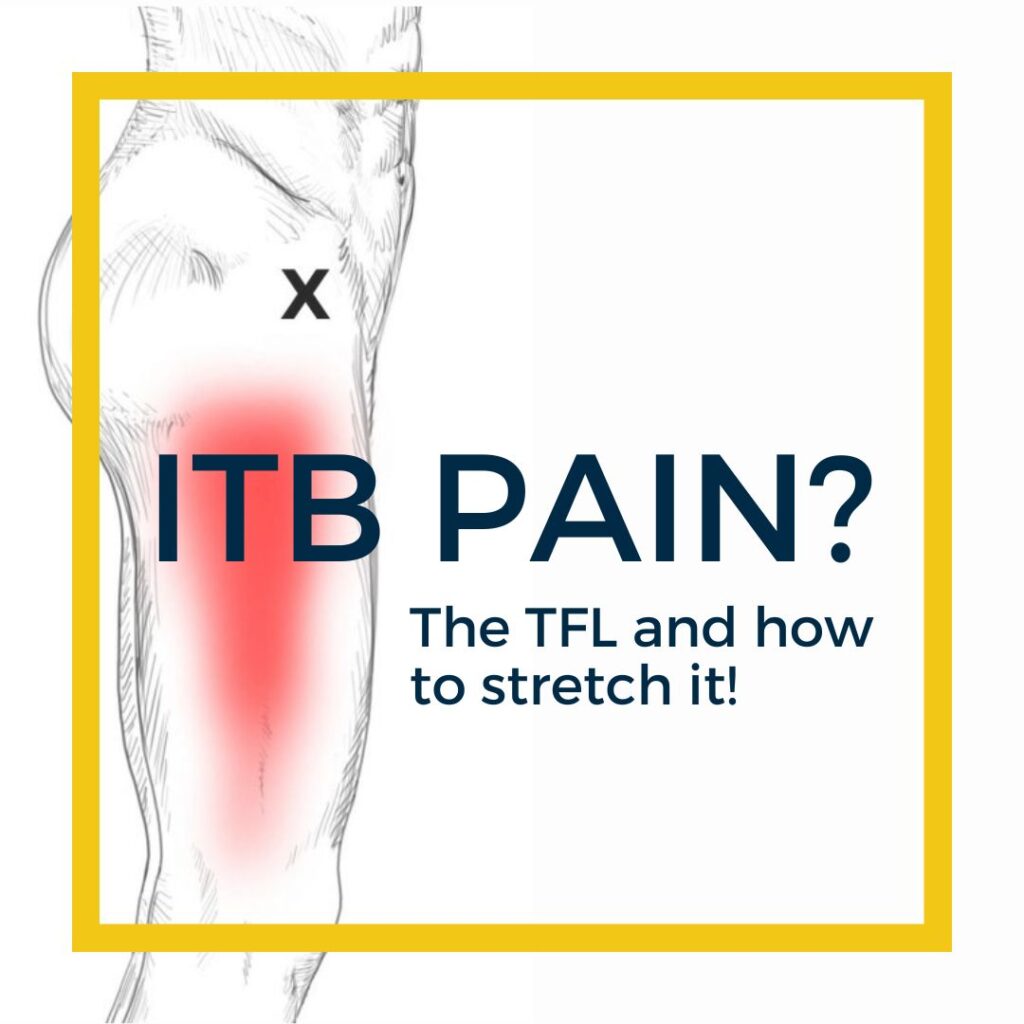
Iliotibial band (ITB) syndrome is one of the most common causes of knee pain in runners and cyclists, and it tends to show up just when training is going well. The good news is that it responds well to the right mix of load management, targeted stretching and addressing the things that caused it in the first place. Here is what ITB syndrome is, why it happens, and what actually helps.
What is the ITB?
The iliotibial band is a thick strip of connective tissue that runs down the outside of the thigh, from the hip to just below the knee. It works with the muscles around the hip, particularly the tensor fasciae latae (TFL) and the gluteals, to stabilise the leg when you walk, run or pedal. It is not a muscle you can lengthen by stretching the band itself, which is why effective treatment focuses on the muscles and movement patterns around it.
What ITB syndrome feels like
The classic symptom is a sharp or burning pain on the outside of the knee, often coming on at a predictable point in a run or ride and easing when you stop. Some people feel it more on downhills or stairs. In the early stages it settles quickly with rest, but left unaddressed it can become a persistent ache that limits training.
Why it happens
ITB syndrome is usually an overload problem rather than a single injury. Common contributors include:
- Ramping up training volume or intensity too quickly
- Weakness in the hip stabilisers, especially the glutes, which makes the TFL work harder
- Running on cambered surfaces or always in the same direction on a track
- Worn footwear or a sudden change in shoes
- Tightness through the TFL and hip from long hours of sitting
What helps
Most cases settle with a considered approach rather than rest alone:
- Manage the load. Ease back on the aggravating activity for a short period rather than stopping completely, then build back gradually.
- Stretch the TFL and hip. Releasing the muscles that feed into the band takes tension off the outside of the knee. The video below shows a TFL stretch you can do at home.
- Strengthen the hips. Building glute and hip stability is the part most people skip, and it is usually what stops the problem coming back.
- Address the cause. Check training progression, footwear and running surfaces so the same overload does not return.
A TFL stretch to try
When to get it looked at
If the pain keeps returning despite rest and stretching, or it is sharp enough to change how you move, it is worth having it assessed properly. A clinician can check your hip strength and movement, rule out other causes of outside-knee pain, and put together a plan that gets you back to training without the problem recurring. Book a visit if you would like it looked at.