Pain science, in plain English
Pain is produced by the brain as a response to perceived threat, not measured directly from the tissues. This is why pain does not always match the amount of damage in the body, why it can carry on long after an injury has healed, and why so much can be done to ease it.
This guide gives a clear overview of how pain works, why some pain persists, and what the evidence says about emotions, movement, fear, and the approaches that help, with links to in-depth guides on each.
Written by Dr Neil Cuninghame, chiropractor and interdisciplinary pain management specialist. MTech Chiro (DUT), PG Dip Interdisciplinary Pain Management (UCT), AHPCSA A10852.
This page is for education and does not replace assessment, diagnosis, or treatment by a qualified health professional.
In short
If your pain has lasted longer than you expected, three points are worth knowing first.
Pain is not a reliable measure of tissue damage. You can have a lot of pain with little damage, and significant changes on a scan with no pain at all.
Persistent pain is often a sign that the nervous system has become over-protective, rather than a sign of ongoing harm. The alarm has been set too sensitively, rather than a fire still burning.
An over-protective system can settle. The brain that learned to protect a movement can learn that it is safe again, given enough calm evidence to go on.
On this page
Pain is an unpleasant sensory and emotional experience that the brain produces to protect you. The International Association for the Study of Pain defines it as an experience associated with, or resembling that associated with, actual or potential tissue damage. The phrase "or potential" matters, because it tells us pain can occur with or without real damage.
To see why, it helps to separate two things that are often confused. When you stub your toe, the nerves in the toe send danger signals toward the spinal cord and brain. These danger signals are called nociception. Nociception is not pain. It is information about possible danger in the tissues. The brain receives that information, weighs it against everything else going on, and only then decides whether to produce pain, and how much.
What does the brain weigh? Far more than the danger signals alone. It draws on your past experiences of pain, your beliefs about what the sensation means, your mood and stress levels, what clinicians have told you, and even what the people around you are doing. Pain is the brain's best estimate of how much protection you need in that moment, built from all of these together. This is why the same stimulus can feel agonising on one day and barely register on another.
None of this means pain is imagined or "all in the head." The pain you feel is real every time. It is produced by a real biological system doing a real job. It simply is not always an accurate reflection of what is happening in the tissues, and understanding that difference is the foundation for everything below. It also matters at scale: low back pain alone is now the leading cause of disability worldwide, and most of that burden is not explained by serious damage.
Clinicians describe pain in two ways: by how long it has lasted, and by the mechanism driving it.
By time, acute pain is recent pain, usually linked to a clear cause such as an injury or strain. Most body tissues heal within a fairly predictable window, often six to twelve weeks for common musculoskeletal injuries, and acute pain tends to settle as they recover. Chronic pain, also called persistent pain, carries on beyond about three months, or beyond the time the tissues would normally take to heal. If the tissues have repaired, why does pain continue? Because pain is produced by the nervous system, and that system can stay in a protective state after the original reason for it has passed.
By mechanism, pain is broadly grouped into three types.
Comes from actual or threatened damage to body tissue, the kind you feel after a sprain.
Comes from damage or disease affecting the nerves themselves, and often feels sharp, burning, or shooting, with pins and needles.
Arises from a change in how the nervous system processes signals, without clear tissue or nerve damage to explain it. It is the mechanism most linked to persistent pain.
These are not mutually exclusive, and one person can have more than one at once. Identifying which is driving the picture is one of the most useful things a pain-informed clinician does.
Pain persists when the nervous system stays protective after the tissues have healed. Rather than switching off as an injury recovers, the alarm can become more sensitive, so the brain keeps predicting danger, amplifying ordinary sensations, and restricting movement, in case protection is still needed.
A car alarm set too sensitively is a fair comparison. It goes off when the wind blows or a heavy vehicle rumbles past. The alarm is not broken. It is reading small, safe signals as if they were threats. A sensitised nervous system does the same.
This is also why a scan often fails to explain persistent pain. The amount of pain a person feels does not reliably reflect the amount of damage in their body. Findings such as disc bulges and degenerative changes are very common in people with no pain at all. In one widely cited review, more than a third of pain-free twenty-year-olds already showed disc degeneration, rising to over ninety per cent by age eighty. A separate study of more than 1,200 people with no neck symptoms found disc bulging in 87.6% of them, including most people in their twenties. A finding on a scan is just a piece of the picture and not a verdict on your pain.
Why does the alarm stay high in some people and settle easily in others? It is rarely one thing. Sleep, stress, mood, general health, previous experiences of pain, and the beliefs a person holds all appear to feed an over-protective system. Poor sleep in particular has a close, two-way relationship with pain (see our guide on sleep and pain). This is why recovery from persistent pain usually involves more than treating the tissues.
If your pain has outlasted its expected healing time, a proper assessment can clarify what is driving it and what will help.
Central sensitisation is when the spinal cord and brain amplify danger signals, so that pain spreads, lingers, or is triggered by things that should not normally hurt. It is a change in how the nervous system processes signals rather than a sign of new damage, and it sits behind much persistent pain.
Clinicians recognise it through a few signs: allodynia, which is pain from something that should not normally hurt, such as light touch or clothing on the skin; hyperalgesia, an outsized pain response to something mildly painful; and pain that has spread beyond the original site. These signs do not mean a person is fragile, or that the pain is invented. They show the volume on the system has been turned up. The encouraging part is that sensitisation can reverse, as the system gathers evidence that it no longer needs to protect so fiercely.
Emotions are not a side issue in pain. They are part of how the brain decides how much pain to produce, because the brain regions involved in fear and threat overlap with those involved in pain. This is one reason a frightening or distressing situation can hurt more than a calm one, even when the physical input is identical. Stress, poor sleep, low mood, and anxiety each tip the system toward more protection, and therefore toward more pain.
The research on pain-related thinking is worth being precise about. Catastrophising, the tendency to expect the worst and dwell on it, is consistently linked with higher pain intensity and slower recovery. The link runs both ways: pain makes dark thoughts more likely, and dark thoughts keep the system braced. That two-way relationship is also encouraging, because it means the loop can be nudged in a calmer direction rather than only a worse one.
The body runs on two broad settings. One gears you up for threat, quickening the heart and breath. The other, the parasympathetic or "rest and recover" setting, slows things down and signals safety. An over-protective nervous system tends to sit too long in the first. Breathing is one of the few parts of this system you can take hold of deliberately, and a slow, full exhale gently switches on the calming setting, which is why breathing out for longer than you breathe in can take the edge off pain and tension.
For most persistent pain, movement is not the threat it can feel like. It is one of the most reliable ways to help a sensitised system settle. The instinct to protect a sore part by keeping it still is sensible in the first days, but when it carries on too long, prolonged rest and avoidance leave muscles weaker, reduce confidence, and leave the nervous system more watchful rather than less.
Movement helps several ways at once. It keeps muscles, joints, and tendons conditioned and able to tolerate load, it gives the nervous system repeated evidence that activity can happen without harm following, and it directly engages the body's own pain-dampening pathways. A phrase worth holding on to is that hurt does not always equal harm. In persistent pain, some discomfort during or after movement is common and does not mean damage is being done. This is also why a reliance on passive treatments and medication alone tends to disappoint over time (more on this in our guide to anti-inflammatories for spinal pain).
Fear is the engine that keeps many people stuck in persistent pain. The pattern is well described as the fear-avoidance cycle: a painful experience leads to a frightening interpretation of the pain, which leads to avoiding the movements that seem risky, which leads to deconditioning, lost confidence, and a more sensitive nervous system, which increases pain and deepens the original fear. The loop feeds back on itself and tightens.
Not everyone gets caught in it. Many people meet a painful movement, find it settles, and recover without becoming stuck. The cycle matters for the times when fear has taken the lead, because it shows where the loop can be interrupted.
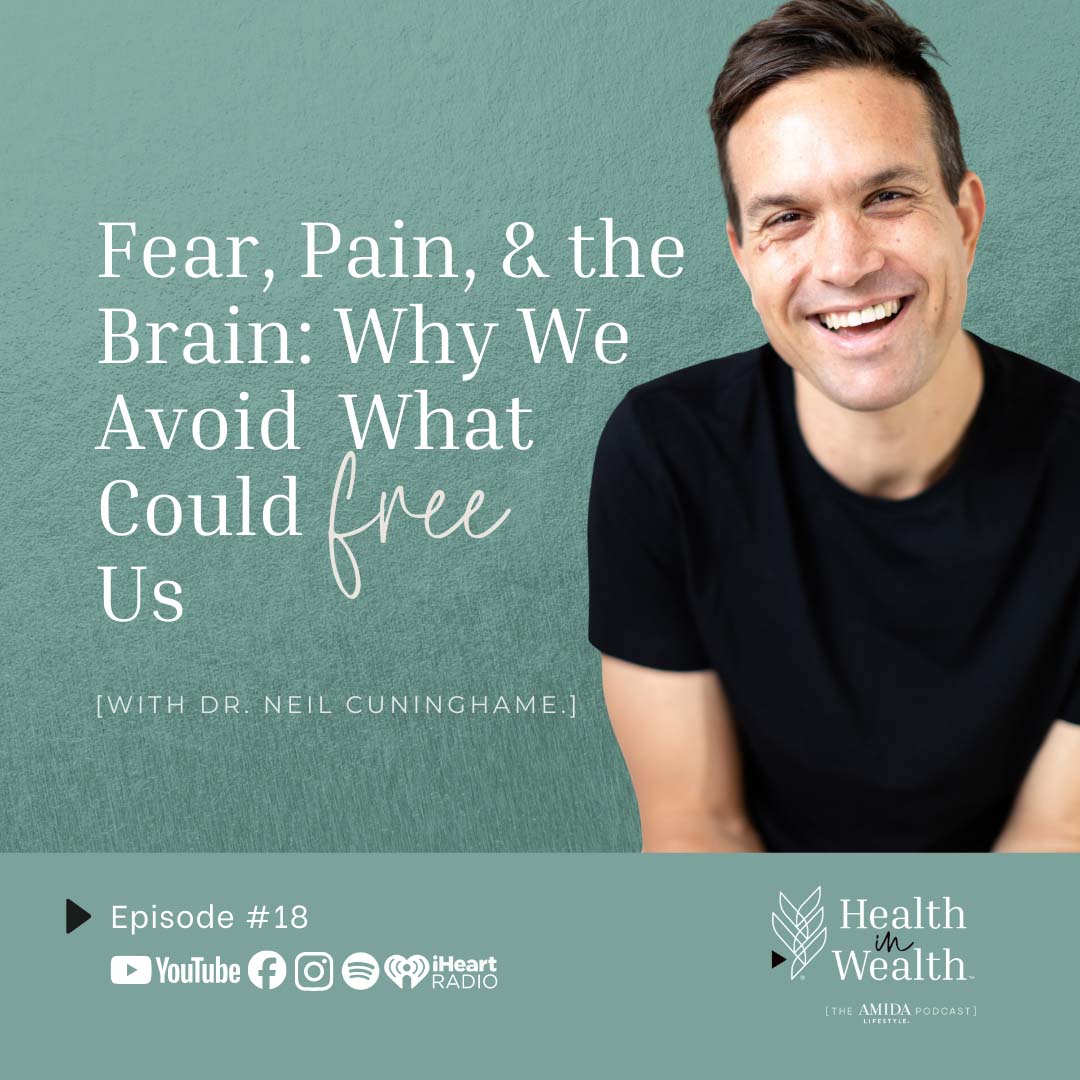
▶ Dr Neil joined the Health in Wealth podcast to explore why fear can keep us stuck in pain, and how understanding the brain's role in pain can help set us free.
Graded exposure is an evidence-based way of breaking the fear-avoidance cycle by reintroducing feared movements in small, deliberate steps, so the nervous system can learn they are safe. What makes it graded exposure is that the steps are ranked not by how hard or heavy they are, but by how much fear each one brings up. A person starts where the fear is manageable and works upward as each step stops feeling threatening.
The mechanism is called inhibitory learning. Repeated safe experiences do not erase the old protective response; they build a new, calmer pathway alongside it that the system comes to prefer with practice. The old learning stays in memory, which is why an old fear can briefly return on a stressful day, and why returning to practice settles it again.
Exercise and active rehabilitation are first-line treatment for most persistent musculoskeletal pain, including the common back and neck pain that brings people to a chiropractor. It rebuilds the strength and load tolerance that avoidance erodes, restores confidence, and produces a direct pain-dampening effect through the body's own systems for quietening danger signals.
A frequent question is which exercise is best. The honest answer is that the specific type matters less than most people expect. What matters more is choosing something you will keep doing, progressing it gradually rather than rushing, and staying consistent over weeks and months. For stubborn tendon problems such as plantar fasciitis, tennis elbow, gluteal tendinopathy, proximal hamstring tendinopathy, and ITB syndrome, a carefully progressed loading programme is one of the best-supported approaches, sometimes supported by shockwave therapy as one part of a wider plan.
Most pain, including most persistent pain, is not dangerous. A small number of symptoms are different in kind, and they call for prompt assessment by a doctor or other qualified clinician, whatever stage of recovery you are at. Seek advice promptly, and in the first case below seek same-day emergency assessment, if any of the following are present:
These signs do not always point to something serious, but they mean the situation should be assessed by a professional rather than managed on your own. Pain that is new in character, steadily worsening, or accompanied by symptoms you have not had before deserves the same caution.
Not sure whether your pain needs a check? A prompt assessment that confirms all is well is time well spent.
I have spent my career trying to understand pain properly. I qualified as a chiropractor in 2009, worked in Ladysmith, Vryheid, and Westville, and moved to Hillcrest in 2019 to focus on pain management. In 2020 I completed a Postgraduate Diploma in Interdisciplinary Pain Management through the University of Cape Town, alongside ongoing training in pain science, because the more I understood pain, the clearer it became that treating tissues alone was only ever half the answer.
In practice, that means looking for the root of a problem rather than chasing symptoms. Care is evidence-based and built around you, and depending on what you need it may include spinal and joint mobilisation, soft-tissue and dry-needling techniques, rehabilitation and graded loading exercises, and practical guidance on movement, sleep, and managing flare-ups. For persistent or complex pain, my practice sits within Meyrickton Park, a medical hub in Hillcrest, so if your recovery needs more than one set of hands, the right people are close by. I see patients from across the Upper Highway and Outer West, and no referral or prior scan is needed to book.

Chiropractor and interdisciplinary pain management specialist, Hillcrest. No referral or prior scan needed to book.

Persistent pain usually reflects a nervous system that has stayed sensitised and over-protective after the tissues have healed, rather than ongoing damage. Pain is produced by the brain in response to perceived threat, and it does not reliably indicate how much damage is present.
Acute pain is recent pain, usually with a clear cause, that tends to settle as tissues heal, often within six to twelve weeks. Chronic or persistent pain carries on beyond about three months, or beyond normal healing time, and reflects an over-protective nervous system more than ongoing harm.
Not necessarily. Disc bulges and degenerative changes are very common in people with no pain at all, found in around 88% of pain-free people on neck MRI and over 90% of pain-free people by age eighty. A finding on a scan is just a piece of the picture and not a verdict on your pain.
For most persistent pain, gradual and confident movement is safe and helpful, and exercise is a first-line treatment for common back and neck pain. The exceptions are the warning signs listed above, which should be assessed by a clinician first.
Central sensitisation is when the spinal cord and brain amplify danger signals, so pain spreads, lingers, or is triggered by things that should not normally hurt. It is a change in how the nervous system processes signals, and it can settle over time.
Graded exposure is returning to feared movements in small steps ranked by how much fear they raise, staying with each until it feels safe. It works by giving the nervous system repeated evidence that movement is safe.
Seek assessment for any of the warning signs listed above, or for pain that is new in character, steadily worsening, or accompanied by symptoms you have not had before.
Selected references, with confirmed DOI or PubMed links.
This page is for education and does not replace assessment, diagnosis, or treatment by a qualified health professional. If you are in significant pain or distress, or notice any of the warning signs above, seek professional help.